
- Read & Respond to today’s Warm Up
- Strong reviews editing in Lightroom.
- Turn in your practice photos for Leading Lines.
- Into Google Classroom.

Flex Your Photographic Muscle
http://www.thisiscolossal.com/2015/09/the-wonderland-book/
After viewing the photos contained in the link above, answering the following questions using complete sentences and responding to these by leaving a comment to the comment link above.
What stories do you think Kirsty Mitchell is trying to tell in these photograph? What gives you those ideas? How does MItchell inject narrative into these photographs? How could you inject narrative or story into your own photographs?
http://www.thisiscolossal.com/2013/09/benoit-courti/
After viewing the above photos, post the answers to the questions below as a comment to THIS POST.
What does black and white do to these images? What would these look like as color photographs? How many subjects are present in these images? What do we get out of just focusing on one subject? What meaning to you make out of these photos? How do they you feel?

According to the Principles and Elements of Design:
Line is a mark with greater length than width. Lines can be horizontal, vertical or diagonal, straight or curved, thick or thin.
For next week’s photo challenge, you will take ONE PRACTICE IMAGE AND ONE FINAL IMAGE that use LEADING LINES TO CREATE DEPTH IN AN IMAGE. So as you walk around this week, look at the world around you, LEADING lines are everywhere, and not just in the student parking lot. Barbed wire fences are lines, so are chalk drawings you draw yourself. Look at all the different ways. played with lines, now you can too!!!!
Remember before you shoot, think about the following items.
1. Think outside the box -your first idea might be original, or it might be the first thing everyone thinks about.
2. Put your own spin on things – the more you bring your own personality, culture, life experience, quirks, etc, the more the viewer will get that a real person is trying to talk to them through a photograph.
3. Make a list of what you want to shoot BEFORE you go out and shoot. Always have a plan, man.
ONE Practice photo will be due on Wednesday, September 28th . ONE Final Photo will be due on Friday, September 30th .
HOW TO TURN THE PHOTOS IN.

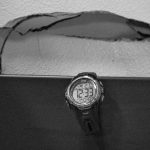

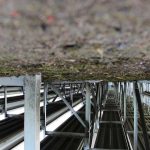


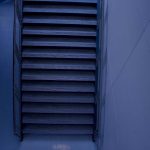

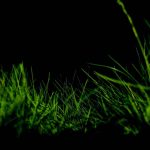

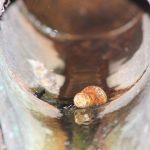
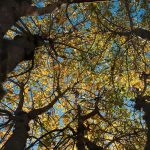



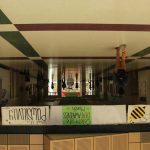



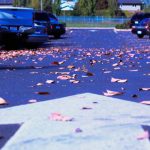

Step 1: Get together in your CFGs and pull up the final unusual POV photos you made last week.
Step 2: Each person should be able to answer these questions about each photo in your CFG. Write down the group’s thinking on each of these questions for each of your photos. Post the answers in a google doc and turn it into Google Classroom. Critiques are due on Tuesday.EVERYONE TURNS IN A COPY OF THEIR GROUPS SUMMARIZED CRITIQUE.
1. Does this photo successfully demonstrate an unusual point of view or camera angle? Or was the image taken from a traditional position? Is there a clear subject in this photo, or is it hard to figure out what the photographer wants you to look at? How could this image’s camera angle be more unusual?
2. Is the subject in focus? Is any part of the image in focus? What could be done to improve the focus for this image.
Each person turn in a copy of their group’s summarized answers to the above questions in google classroom. You might have to copy and create a new document, then paste to turn it in.
AFTER CRITIQUING ALL THE IMAGES IN YOUR GROUP, EACH PERSON TURNS IN A COPY OF THEIR GROUPS THOUGHTS ON THESE QUESTIONS INTO GOOGLE CLASSROOM BEFORE THE END OF THE CLASS TOMORROW.
DO YOUR VOTING HERE:
[googleapps domain=”docs” dir=”forms/d/e/1FAIpQLSdp0mAyz_K-wZ2j_ZS8HIodorMzXNcWYs_PS8R3Gx0w5Wod7g/viewform” query=”embedded=true” width=”760″ height=”500″ /]
Today’s Warm Up:Painstaking Arrangements of Colorful Objects and Food by Emily Blincoe
After viewing the above photos, reply to the questions below using complete sentences as a comment to THIS POST.
Where does the magic lie in these photographs? Is Photoshop the answer? Or is it in the way these items are arranged? What happens when we go to long lengths to create a visual effect, when we put in the work of painstakingly arranging several objects like they do in these photographs? What could you take out of these photos to apply to your own photography?
